
A Freedom Trail tour can lead you to Boston's most important historic landmarks. But following the famous red line is only the beginning. The real experience comes from understanding the people who gathered inside those buildings, walked those streets, challenged authority, and made decisions that changed the country's future.
A Boston walking tour along the Freedom Trail covers approximately 2.5 miles, beginning at Boston Common and ending at the Bunker Hill Monument. Along the route, visitors encounter 16 official historic sites, including burial grounds, churches, meeting houses, government buildings, battle sites, and surviving homes from colonial Boston.
It sounds simple: find the red line and follow it through the city.
However, the route can only tell you where to go. It cannot explain why a meeting house became a center of resistance, why a confrontation outside the Old State House helped transform public opinion, or why Patriots and Loyalists could witness the same events and reach entirely different conclusions.
That is the real challenge of exploring Boston's revolutionary history: not finding the landmarks, but discovering the people and conflicts behind them.
What Is the Best Way to Walk the Freedom Trail in Boston?
The best way to choose a Freedom Trail tour depends on how much flexibility, historical context, and personal interaction you want during your visit.
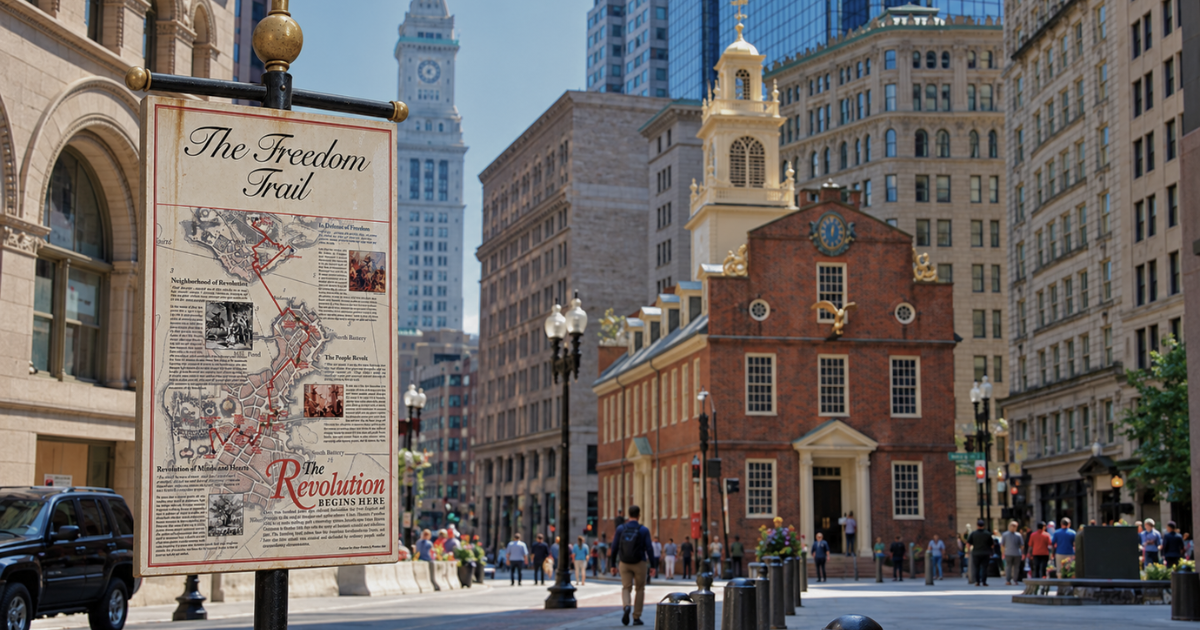
Travelers generally have three options: joining a traditional guided walk, following the route independently, or using a Freedom Trail app for an app-assisted experience. Each reveals a different side of Boston.
Take a Traditional Guided Walking Tour
A live guide can connect the people, places, and events for you, although the group determines your schedule and pace.

A traditional Freedom Trail tour is a good choice for first-time visitors who enjoy live storytelling and want the opportunity to ask questions. An experienced guide can explain connections between events, challenge popular myths, and point out architectural or historical details that are easy to overlook.
Travelers searching for the Walk Into History tour in Boston will find the Freedom Trail Foundation's 90-minute experience, led by an 18th-century costumed guide. The tour visits 11 of the Freedom Trail's 16 official sites and introduces the people and events that shaped Revolutionary Boston. The Foundation also offers themed experiences focused on Paul Revere and the North End, African American Patriots, revolutionary women, Boston's LGBTQ+ history, and darker stories from the city's past. Tour availability varies throughout the year, so visitors should consult the Foundation's current tour calendar before making plans.
Other organizations approach Boston's history from different perspectives. Revolutionary Spaces offers tours examining the Boston Massacre and the experiences of enslaved people in colonial Massachusetts. At the same time, Boston By Foot provides volunteer-led walks devoted to architecture, abolition, Black writers, women's history, LGBTQ+ history, literature, immigration, and individual neighborhoods. These specialized Boston historic walking tours are useful for visitors who want to explore one part of the city's history in greater depth.
Several other companies also lead costumed walks along the trail, and two of them sell tickets at the Boston Common Visitor Information Center at 139 Tremont Street, operated by Meet Boston (the Greater Boston Convention & Visitors Bureau). Boston Town Crier’s 90-minute public tour departs from the visitor center daily at 9:30 a.m., 12:30 p.m., and 2:30 p.m. and covers 11 major sites between Boston Common and Faneuil Hall. Its guides portray colonial Bostonians such as James Otis and Robert Newman, and the company also offers three- and four-hour private tours. The Histrionic Academy’s Tour of the Freedom Trail is also led by costumed historical interpreters. Its 90- to 110-minute public walk covers about 1.2 miles, from Boston Common to the Paul Revere House, with departures from both the visitor center and 120 Tremont Street. The tour includes the experiences of enslaved and free Black Bostonians, and the Academy also leads lantern-lit evening tours of the North End on Friday and Saturday nights.

Visitors who prefer a smaller group without the theatrics can book Hub Town Tours, a local company founded in 2016. Its 2.5-hour Freedom Trail walk is capped at 16 guests, covers all 16 official sites, and starts at $39 per person plus the 5% Massachusetts sightseeing tax. Budget-minded travelers can also join Free Tours by Foot, which runs a regularly scheduled, pay-what-you-wish Freedom Trail walk.
The National Park Service, which manages Boston National Historical Park, offers free ranger-led programs. Its 75-minute “Enemies to this Country” tour starts at the Faneuil Hall Visitor Center, ends at Old North Church, and explores how Patriots and Loyalists each experienced the crisis of 1774. In 2026, it runs Wednesday through Sunday from late May to mid-October; visitors can register in advance through Eventbrite or check in at Faneuil Hall on the day of the tour. On Thursday evenings in summer and fall, rangers also lead free “History at Sunset” walks on topics ranging from the Boston Massacre to the Underground Railroad.
The main limitation to guided tours is the fixed structure. Visitors must arrive at a particular time, stay with the group, and follow the guide's selected route. There may be limited (or no) time to enter a building, take photographs, stop for lunch, or spend longer with a story that captures your attention.
Walk the Freedom Trail by Yourself
An independent Freedom Trail tour gives you complete control, but it requires more preparation if you want to understand the history rather than simply see the sites.
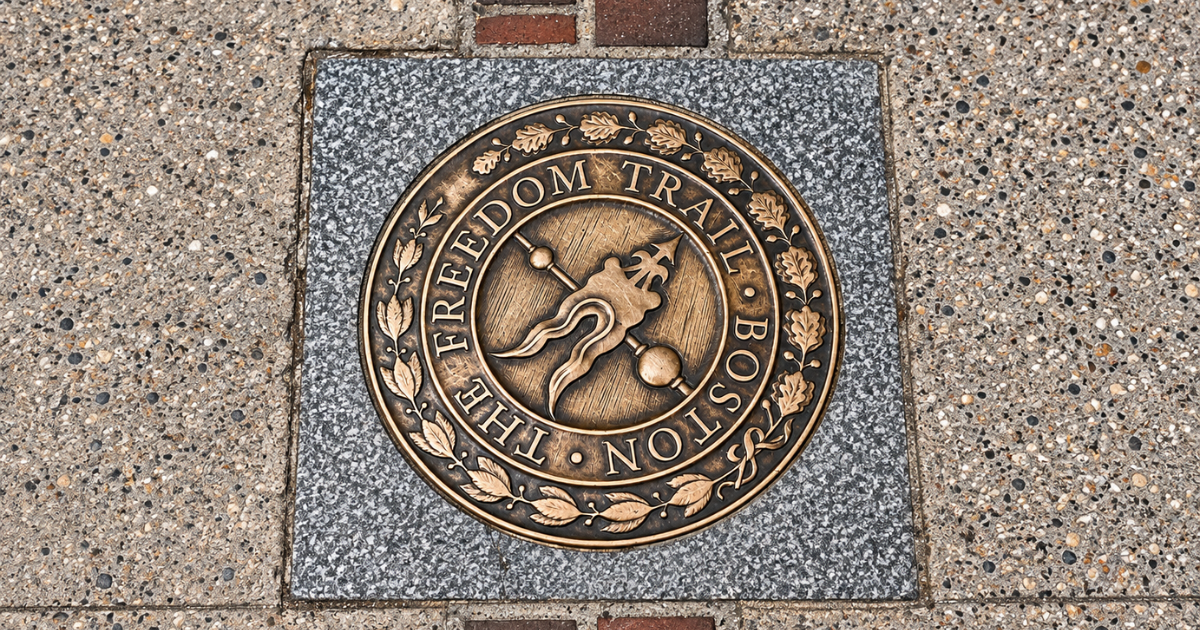
Yes, you can walk the Freedom Trail without hiring a guide. The route was deliberately designed to be followed independently, with red bricks or painted markers connecting one official site to the next. You can also pick up a Freedom Trail map at the Boston Common Visitor Information Center, at the Meet Boston store at 99 High Street, at the National Park Service Visitor Center at Faneuil Hall, at the Charlestown Navy Yard, or by ordering one online from https://www.meetboston.com/.
Another option for walking the trail by yourself is an audio tour The Boston Common visitor center sells smartphone audio tours from WalknTours (a GPS-enabled Freedom Trail tour for $6.99) and Action Tour Guide (a Freedom Trail and Bunker Hill Monument audio tour), along with tickets for hop-on, hop-off trolley and bus tours from Old Town Trolley, CityView Trolley, and Boston Sightseeing Double Decker Tours.
A self-guided Boston walking tour may be the best option if you:
- Prefer to start early or later in the day, or just at a time that doesn’t line up with the start of a guided tour.
- Want to stop for meals, museums, or photographs.
- Are exploring Boston with children who need breaks.
- Enjoy researching destinations before visiting.
- Want to divide the route across two days.
- Care more about certain historical periods or people than others.
The risk is that "self-guided" can quickly become "under-explained." A plaque may identify a building without conveying the fear, ambition, disagreement, or uncertainty once contained within it. Visitors can finish the route remembering several attractive buildings and maybe a few famous names without understanding how their stories fit together.
Use a Freedom Trail App
New technology combines the independence of a self-guided walk with historical storytelling delivered at the places where the events happened.
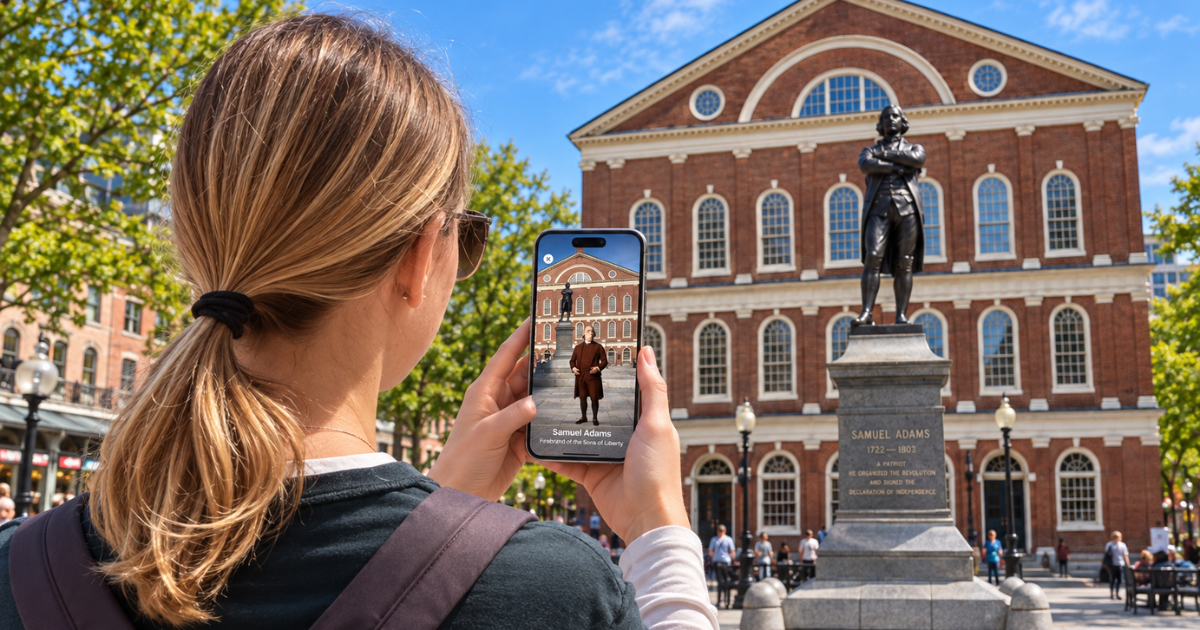
A Freedom Trail app can provide directions and historical context without requiring you to join a group or follow a fixed schedule. Some apps rely on maps, text, or audio. AR (Augmented Reality) apps, like PastPort, take it a step further by allowing historical figures to appear within the visitor's real surroundings.
With PastPort, visitors can use an in-app map or location notifications to discover historical figures associated with nearby Boston sites. After selecting a figure, they point their phone toward the ground ahead and place that person within the scene through AR. The figure then appears before them and shares a carefully researched account of their life and historical role.
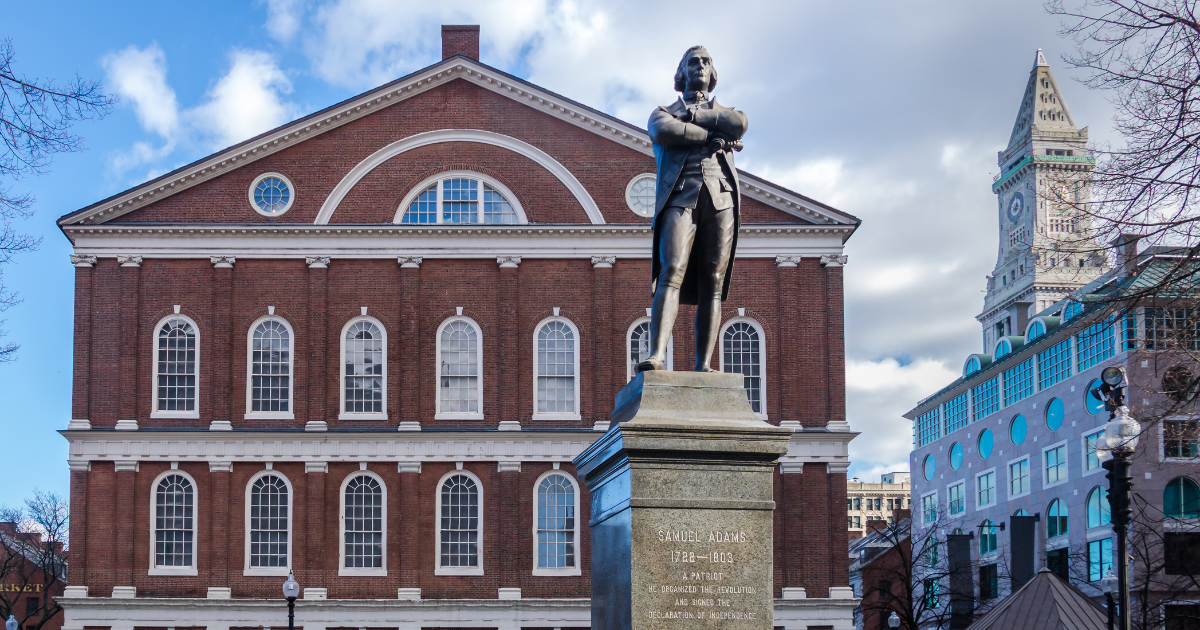
Imagine standing near Faneuil Hall after walking past shops, traffic, and crowds. You lift your phone, point it toward the pavement, and suddenly Samuel Adams appears in front of you. The building behind him stops feeling like an old backdrop. You begin picturing the arguments, public meetings, and political organizing that made the location important. Later, you may forget a date written on a plaque, but you are far more likely to remember the moment a person from revolutionary Boston seemed to step back onto the street.
That is what makes AR especially powerful for historical exploration. It does not merely give visitors more information. It gives that information a setting, a face, and a memorable moment. Instead of reading about a historical figure from a distance, you encounter that person where part of their story unfolded. It feels less like reviewing history and more like watching it come alive around you.
AR done well should not distract from the real landmark. At its best, it makes you look more closely at the location. Once you understand who stood there and what was at stake, the building, street, or burial ground becomes much harder to see as just another stop.
Freedom Trail Tour: Guided vs. Self-Guided
The right format depends less on how much history you know and more on how you prefer to travel.

The debate over a Freedom Trail guided tour vs. a self-guided experience is often oversimplified. Guided tours are described as educational, while independent tours are described as convenient. In reality, either format can be thoughtful or superficial.
For many visitors, the most rewarding approach is a hybrid one.
You might join a guided walk to understand the broader revolutionary story and then return independently to selected locations. Alternatively, you could use an app-assisted Freedom Trail tour as your main experience and enter the museums, churches, or historic homes that interest you most.
There is no prize for completing every stop as quickly as possible. The Freedom Trail is not a checklist disguised as a sidewalk.
Where Does the Freedom Trail Begin and End?
The official route begins at Boston Common, passes through downtown and the North End, and finishes in Charlestown.
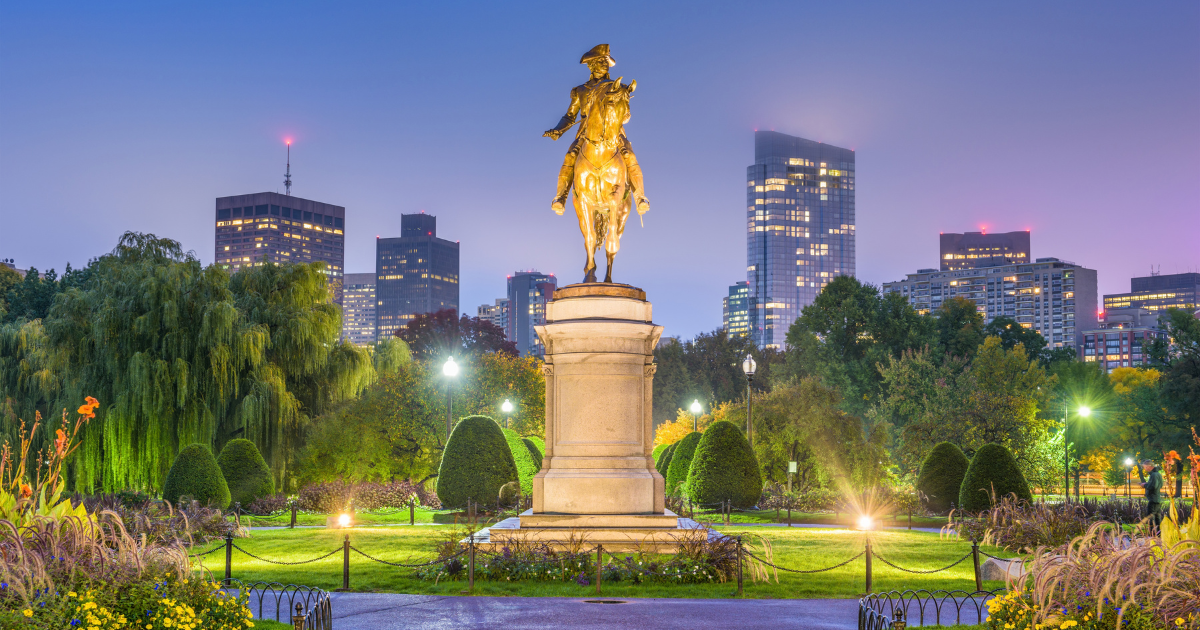
Most visitors begin at Boston Common near the Massachusetts State House. The route continues through central Boston and Government Center, enters the North End, and then crosses into Charlestown.
The 16 official Freedom Trail sites are:
- Boston Common
- Massachusetts State House
- Park Street Church
- Granary Burying Ground
- King's Chapel and King's Chapel Burying Ground
- Boston Latin School Site and Benjamin Franklin Statue
- Old Corner Bookstore
- Old South Meeting House
- Old State House
- Boston Massacre Site
- Faneuil Hall
- Paul Revere House
- Old North Church
- Copp's Hill Burying Ground
- USS Constitution
- Bunker Hill Monument
Although 2.5 miles may sound like a short walk, distance alone does not reveal how long the experience will take. Traffic lights, crowds, uneven surfaces, photographs, meals, and visits inside historic buildings can add several hours.
A brisk exterior-only walk can be completed in two or three hours. A more thoughtful visit can take up most of a day, especially if you visit museums and historic sites or stop to listen to stories along the way.
Why are these the sites on the Freedom Trail?
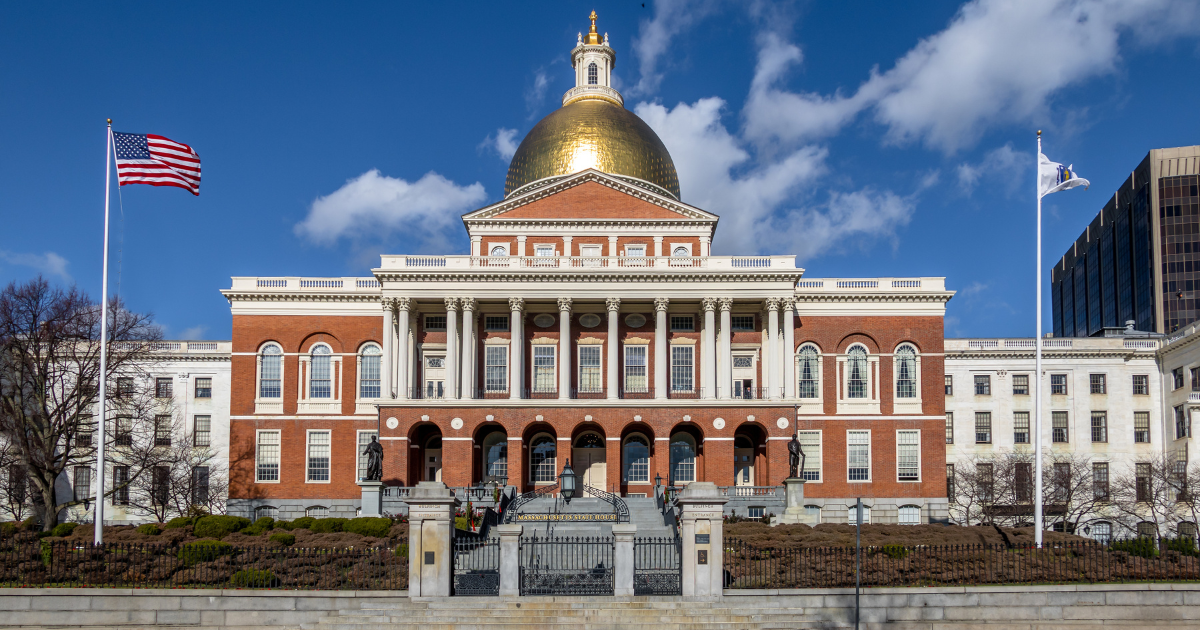
The official sites on the Freedom Trail are set by Boston’s Freedom Trail Commission; the list has not changed for decades. Here is what to know about each site and why it is worth visiting:
Boston Common: Set aside in 1634, America’s oldest public park was once a place of public punishment, where Quaker Mary Dyer was hanged in 1660 for practicing her faith. From 1768 it served as the camp of the British troops sent to occupy Boston. In April 1775, redcoats set out from here toward Lexington and Concord. There is no building to enter, but stepping into the Common rewards you with the Central Burying Ground and, on its Beacon Street edge, the memorial to Robert Gould Shaw and the 54th Massachusetts Regiment, the Black soldiers who fought for the Union and emancipation.
Massachusetts State House: Completed in 1798 on land that was once John Hancock’s pasture, and designed by Charles Bulfinch, the “new” State House gave the new Commonwealth a permanent home for self-government; Samuel Adams and Paul Revere helped lay its cornerstone in 1795. Free tours lead through Doric Hall, the Hall of Flags, and the House and Senate chambers, where the Sacred Cod still hangs, offering a rare look at a working legislature in a building the Revolution’s leaders helped create.
Park Street Church: Founded in 1809, Park Street Church carried Boston’s fight for liberty into the 19th century: William Lloyd Garrison gave his first major public address against slavery from its pulpit on July 4, 1829 (although he later regretted not being more strident), and the hymn “America” (“My Country, ‘Tis of Thee”) was first sung here two years later. Stepping into the sanctuary beneath Peter Banner’s 217-foot steeple lets you stand where Boston’s abolitionist movement found its voice. Check the church’s schedule for visiting hours.
Granary Burying Ground: Established in 1660, the Granary holds three signers of the Declaration of Independence (John Hancock, Samuel Adams, and Robert Treat Paine), along with Paul Revere, James Otis, the five victims of the Boston Massacre, and Benjamin Franklin’s parents. Walking through the gates lets you read slate headstones carved with winged skulls and soul effigies, and see how revolutionaries, Black Bostonians such as Frank, a servant of John Hancock, and ordinary townspeople were buried side by side.
King’s Chapel and King’s Chapel Burying Ground: Founded in 1686 as New England’s first Anglican congregation, imposed by the Crown on Puritan Boston, King’s Chapel stood for royal authority until the Revolution, after which it became America’s first Unitarian church. Inside, you’ll find high box pews, a governor’s pew, and a bell cast by Paul Revere’s foundry in 1816; guided tours also visit the crypt and bell tower. Next door, Boston’s oldest burying ground (1630) holds John Winthrop (the first Governor of Massachusetts) and Mary Chilton, said to be the first European woman to step ashore at Plymouth.
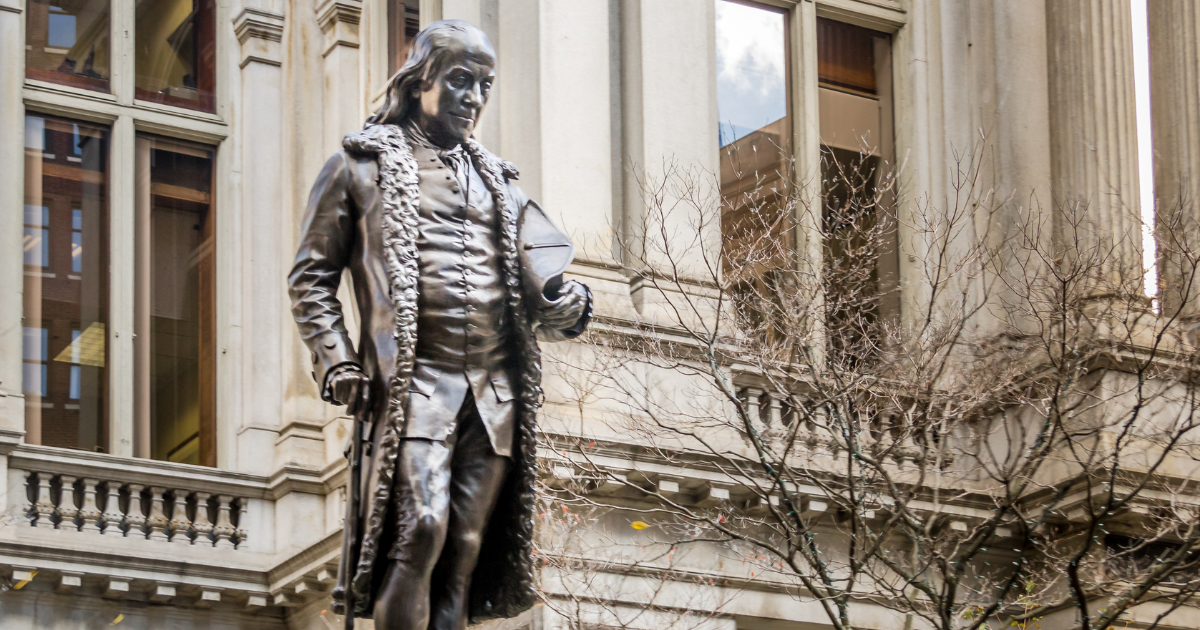
Boston Latin School Site and Benjamin Franklin Statue: America’s first public school opened in 1635, and its students included Samuel Adams, John Hancock, Robert Treat Paine, and Benjamin Franklin (who left before graduating). A sidewalk mosaic marks the spot, beside the 1856 statue of Franklin outside Old City Hall. There is no museum to enter here, so plan a short stop: the site reminds visitors that public education helped produce a generation ready to argue for its own rights.
Old Corner Bookstore: Built in 1718 on land that was once home to Anne Hutchinson, who was banished in 1638 for challenging Boston’s Puritan ministers, downtown Boston’s oldest surviving commercial building later housed Ticknor and Fields, the publishers of Walden, The Scarlet Letter, and many anti-slavery tracts. Its story connects freedom of conscience with the freedom to publish. Today the building holds shops and offices rather than a museum, so most visitors admire its gambrel roof and brick facade from the sidewalk.
Old South Meeting House: On December 16, 1773, about 5,000 colonists packed Boston’s largest building to protest the tea tax; when their final appeal failed, the crowd headed for Griffin’s Wharf and the Boston Tea Party. Phillis Wheatley, the enslaved poet whose writing challenged the logic of slavery, worshiped here, and British troops later gutted the interior to use it as a riding school. Inside, Revolutionary Spaces’ exhibits and programs bring those debates back to life in the same galleried hall. Recently opened, Ruckus is a high quality immersive experience that tells the story of the Revolution from a “rat’s eye” perspective – don’ miss it!
Old State House: Built in 1713 as the seat of British colonial government, this is Boston’s oldest surviving public building. In 1761, James Otis argued against the writs of assistance in its Council Chamber, and on July 18, 1776, the Declaration of Independence was read to Bostonians from its east balcony. Its museum, run by Revolutionary Spaces, lets you step into that Council Chamber and see artifacts from the colonial and Revolutionary eras.
Boston Massacre Site: On March 5, 1770, British soldiers fired into a crowd on King Street, killing five men, including Crispus Attucks, a sailor of African and Native American descent who became one of the Revolution’s first martyrs. A circle of cobblestones marks the spot, so there is nothing to enter; instead, visit the Old State House beside it, whose exhibits examine the Massacre and how Paul Revere’s famous engraving shaped public anger.
Faneuil Hall: Known as the “Cradle of Liberty,” Faneuil Hall hosted protests against the Sugar and Stamp Acts and later rang with speeches by abolitionists such as Frederick Douglass and Wendell Phillips. Its story is also uncomfortable: Peter Faneuil, the merchant who gave the hall to the town in 1742, profited from the slave trade and enslaved people himself. The second-floor Great Hall is free to visit, and National Park Service rangers give talks there about the debates that have filled it for nearly three centuries.
Paul Revere House: Built around 1680, this is the oldest house still standing in downtown Boston, and it was Paul Revere’s home when he set out on April 18, 1775, to warn that British troops were marching toward Lexington and Concord. Inside, period rooms show how a working artisan and his large family lived, a reminder that the Revolution depended on tradesmen as well as lawyers and merchants.
Old North Church: On the night of April 18, 1775, sexton Robert Newman climbed the steeple of Boston’s oldest standing church (1723) and hung two lanterns to signal that British troops were crossing by water from Boston Common toward Lexington and Concord. Inside, you can sit in the original box pews, and guided tours take visitors into the crypt, where more than 1,000 people are buried, and up to the bell-ringing chamber.
Copp’s Hill Burying Ground: Founded in 1659, Copp’s Hill holds the Mather family of Puritan ministers and Prince Hall, the abolitionist who founded Black Freemasonry in America, along with a large community of free and enslaved Black Bostonians. During the Battle of Bunker Hill, British cannons fired on Charlestown from this hilltop, and patriot Daniel Malcolm’s gravestone still bears marks said to come from British musket balls. Walk inside the gates for those stories and for views across the river to Charlestown.
USS Constitution: Launched in Boston in 1797, “Old Ironsides” earned her nickname in the War of 1812, defending the young nation’s independence and its right to trade freely at sea; her crews included white and free Black sailors. She is the oldest commissioned warship afloat, and active-duty U.S. Navy sailors lead free tours of her decks, where you can see the guns and the cramped quarters the crew shared. Adults should bring a government-issued photo ID.
Bunker Hill Monument: Although colonial forces lost the battle of June 17, 1775, they inflicted such heavy losses that it proved Americans could stand against a professional army; Black soldiers such as Peter Salem and Salem Poor fought in their ranks. Climbing the 294 steps inside the 221-foot granite obelisk is free and rewards you with sweeping views of Boston and the harbor, while the Bunker Hill Museum across the street explains the battle in depth.
Who Are the Famous People on the Freedom Trail?
This Boston walking tour is associated with celebrated revolutionaries, but its complete story also includes sailors, laborers, Loyalists, victims, women, and Black Bostonians.
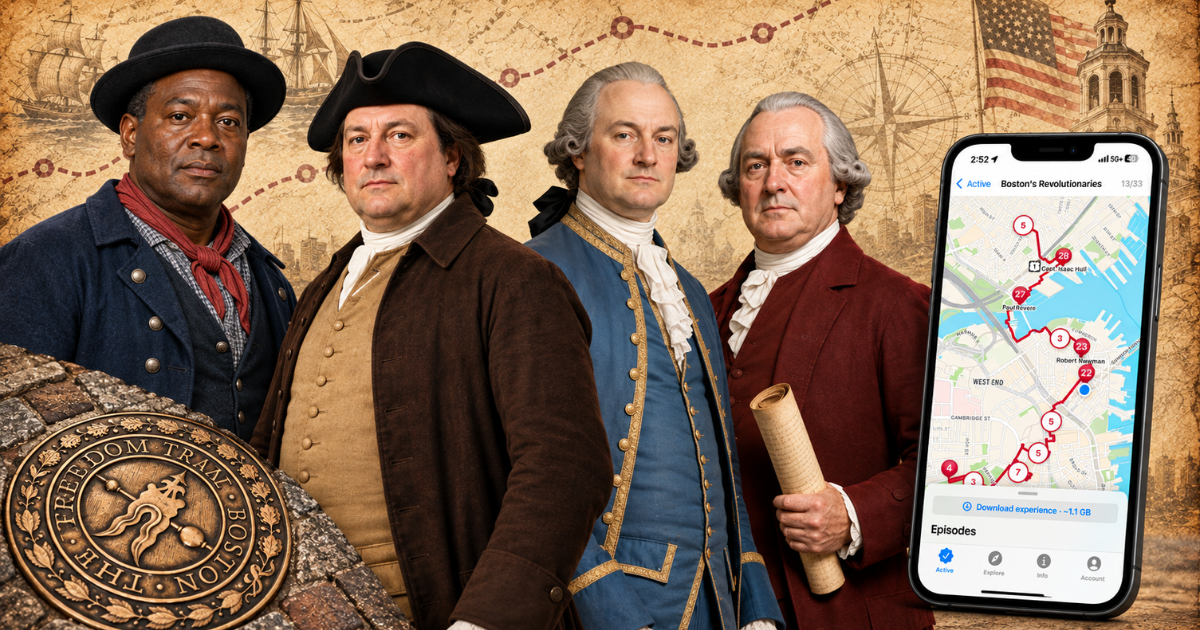
Samuel Adams, John Hancock, Paul Revere, Benjamin Franklin, and Crispus Attucks are among the best-known figures associated with the trail. However, concentrating exclusively on famous founders creates an incomplete—and often misleading—picture of revolutionary Boston.
The Revolution was not produced by a few men delivering perfect speeches in empty rooms. It emerged from commercial rivalries, political organizing, imperial policies, crowded streets, public anger, and conflicting definitions of liberty.
Samuel Adams
Samuel Adams helped transform local resistance into organized political action.
Adams understood communication, public pressure, committees, and the political power of collective action. His connection to places such as Faneuil Hall and the Old South Meeting House reveals how Boston's shared civic spaces became centers of resistance.
He is buried at Granary Burying Ground.
John Hancock
John Hancock used his wealth, reputation, and political visibility to support the revolutionary cause.
Hancock is popularly remembered for his enormous signature, but he was also a successful Boston merchant and influential political leader. His story shows that resistance to Britain occurred through commerce, public influence, and symbolism as well as warfare.
He is also buried at Granary Burying Ground.
Paul Revere
Paul Revere's role in Boston history extends far beyond one famous nighttime ride.
Revere was a silversmith, engraver, entrepreneur, messenger, and political participant. His surviving North End home gives visitors an unusually direct connection to domestic life in colonial Boston.
The Old North Church is associated with the lantern signal that preceded the warning rides of April 18, 1775. Revere's story becomes more meaningful when these locations are considered together instead of treated as unrelated attractions.
Crispus Attucks
Crispus Attucks compels visitors to confront the distance between revolutionary ideals and colonial reality.
Attucks, a sailor and laborer of African and likely Native American ancestry, was among the five people killed by British soldiers during the Boston Massacre on March 5, 1770.
His story complicates the conventional patriotic narrative. A man from a marginalized background later became one of the symbols of a movement that demanded liberty while enslavement remained embedded in ante-bellum American society.
The Boston Massacre Site marks the location of the confrontation. Attucks and the other victims are commemorated at Granary Burying Ground.
Benjamin Franklin
Boston claims Benjamin Franklin as one of its own, although much of his famous public life unfolded elsewhere.
Franklin was born in Boston and attended Boston Latin School, although he did not graduate. A statue now stands near the school's original location.
Visitors are sometimes surprised to discover that Franklin is not buried at Granary Burying Ground. His parents are buried there, but Franklin himself left Boston when he was seventeen and was buried in Philadelphia.
Which Historical Figures Lived Along Boston's Freedom Trail?
Some historical figures lived beside what is now the route, while others worked, worshipped, protested, spoke, or were buried at the sites it connects.
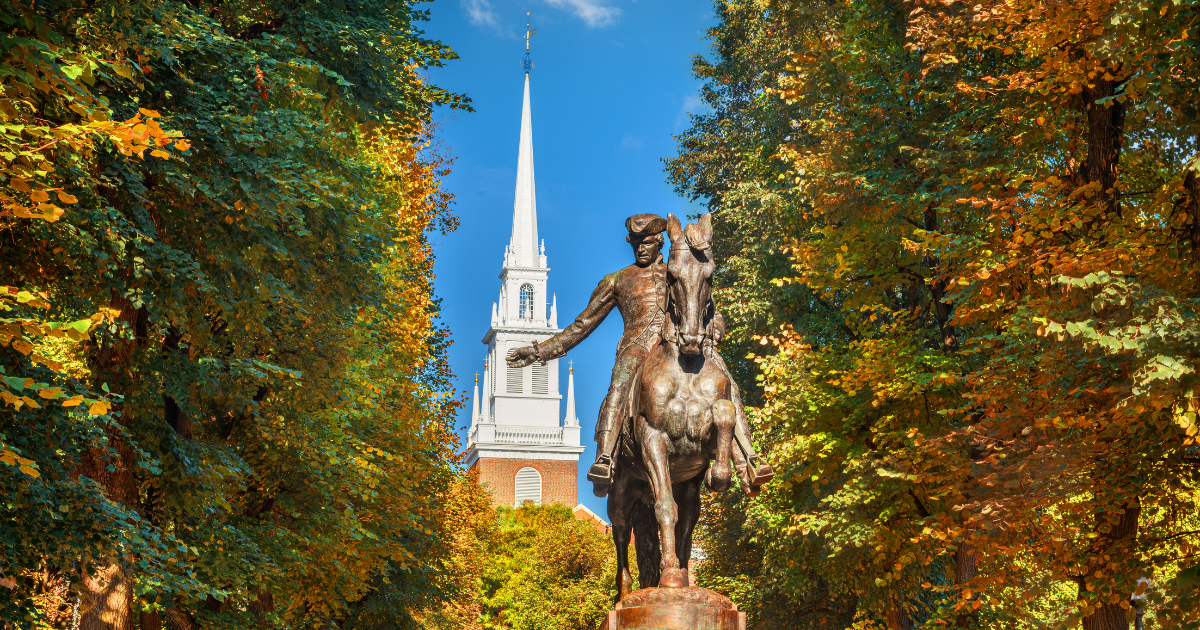
The Freedom Trail did not exist during the American Revolution. It was created in the twentieth century to make it easier for visitors to navigate among the surviving locations associated with different moments in Boston's history.
Paul Revere lived in the North End house that now bears his name. Other figures were closely connected to meeting houses, churches, burial grounds, businesses, and neighborhoods located along the present-day route.
Samuel Adams participated in Boston's political world and spoke at public gatherings. John Hancock moved through its commercial and political circles. Crispus Attucks became permanently associated with the site of the Boston Massacre because of what happened there.
PastPort's Boston's Revolutionaries experience introduces visitors to more than 30 Patriots and Loyalists, while Boston's Abolitionists features more than 20 influential Black and white, male and female abolitionists. Each experience provides three-day access; there is a substantial discount if you purchase access to both.
The inclusion of Loyalists is particularly important. Revolutionary Boston is often presented as though the city moved confidently and unanimously toward independence. It did not. Neighbors disagreed, families were divided, and individuals made dangerous choices without knowing which side would prevail.
History becomes more credible, not less inspiring, when visitors encounter uncertainty alongside courage.
A Smarter Way to Plan Your Freedom Trail Walking Tour
Planning around stories, opening hours, and energy levels creates a better experience than attempting to complete the entire route as quickly as possible.
Start Early Without Rushing
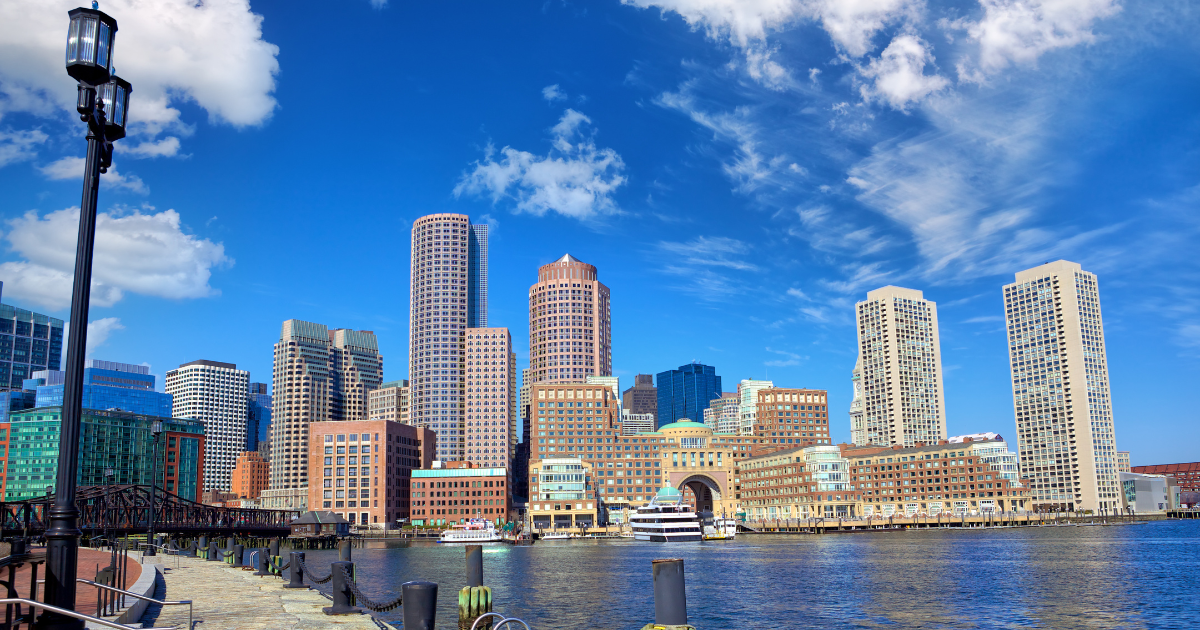
Morning often provides a calmer introduction to Boston Common and the downtown sites, especially if you are planning a full Freedom Trail tour. Starting early also leaves time to visit museums, churches, and historic buildings rather than seeing everything from the sidewalk.
Before beginning your Boston walking tour, check the hours of the individual attractions you want to visit. The outdoor route remains accessible, but the buildings and museums along it have separate schedules and admission policies. A Freedom Trail app can help you navigate between stops and access historical stories as you explore at your own pace.
Divide the Route Into Three Story Zones
Instead of trying to memorize 16 separate stops, divide your Freedom Trail walking tour into three broader sections:
- Boston Common to the Old South Meeting House: civic, religious, and intellectual life.
- Old State House to the North End: political organizing, public protest, violence, and Paul Revere's neighborhood.
- Charlestown: war, commemoration, the USS Constitution, and Bunker Hill.
Thinking in story zones makes the route easier to understand and allows you to divide it across multiple outings if necessary.
Bring Earbuds and a Portable Battery

Boston's streets can be noisy, so earbuds are helpful for audio and AR experiences. A portable battery is also worth carrying if you plan to use maps, take photos, record video, and use augmented reality throughout the day.
Leave Time for Unexpected Discoveries
Boston's density is part of its appeal. A colonial building may stand beside a modern office, subway entrance, or busy marketplace. Some of the most memorable moments happen between the official sites.
A schedule that is too rigid can prevent the curiosity that makes a Boston walking tour worthwhile.
Why Seeing the People Changes the Trail
Traditional preservation encourages us to study buildings. Biography encourages us to study people. The Freedom Trail becomes most powerful when those perspectives meet.
Faneuil Hall is not significant simply because it is old. It matters because people gathered, argued, organized, and tried to persuade one another there. The Old State House is more than an architectural survivor. It represents government authority and overlooks a street where confrontation became deadly.
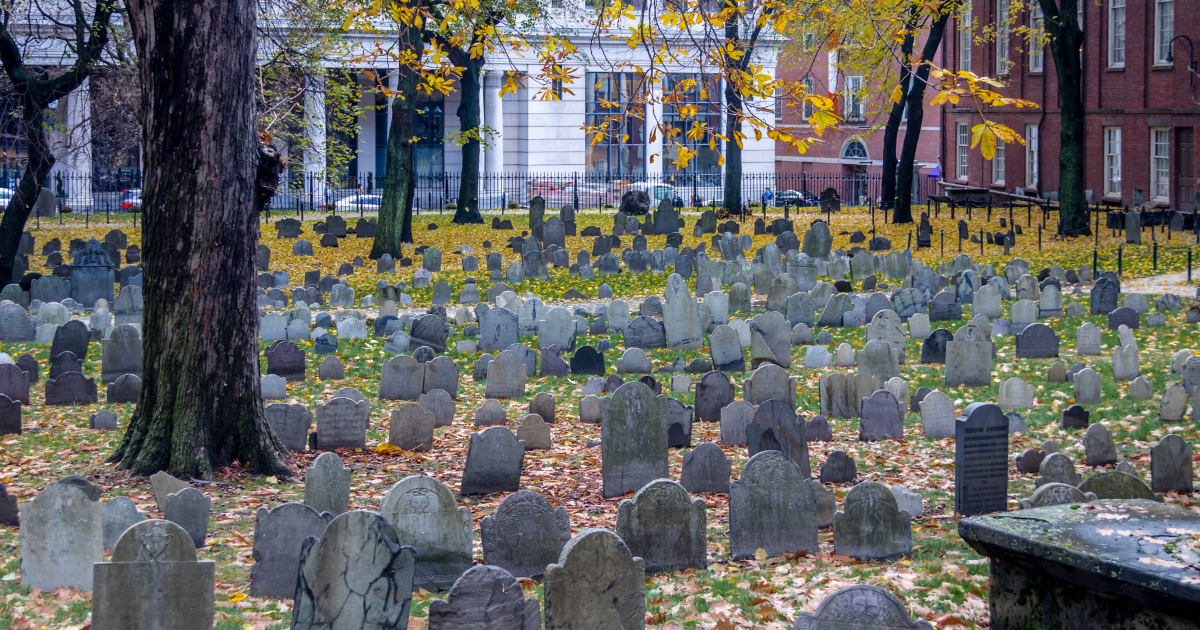
Granary Burying Ground is not merely a collection of famous names. It brings together people whose lives reveal both the ambitions and contradictions of the revolutionary era.
Augmented reality restores a human scale to these places. It creates a visual and emotional connection between a person, a story, and the ground beneath the visitor's feet.
It cannot reproduce the past—and it does not need to. Its value lies in narrowing the distance between "then" and "now." When a historical figure appears at a real Boston location, history is no longer contained entirely inside a book, plaque, or museum display. It becomes an encounter.
The Freedom Trail Is a Story, Not a Scorecard
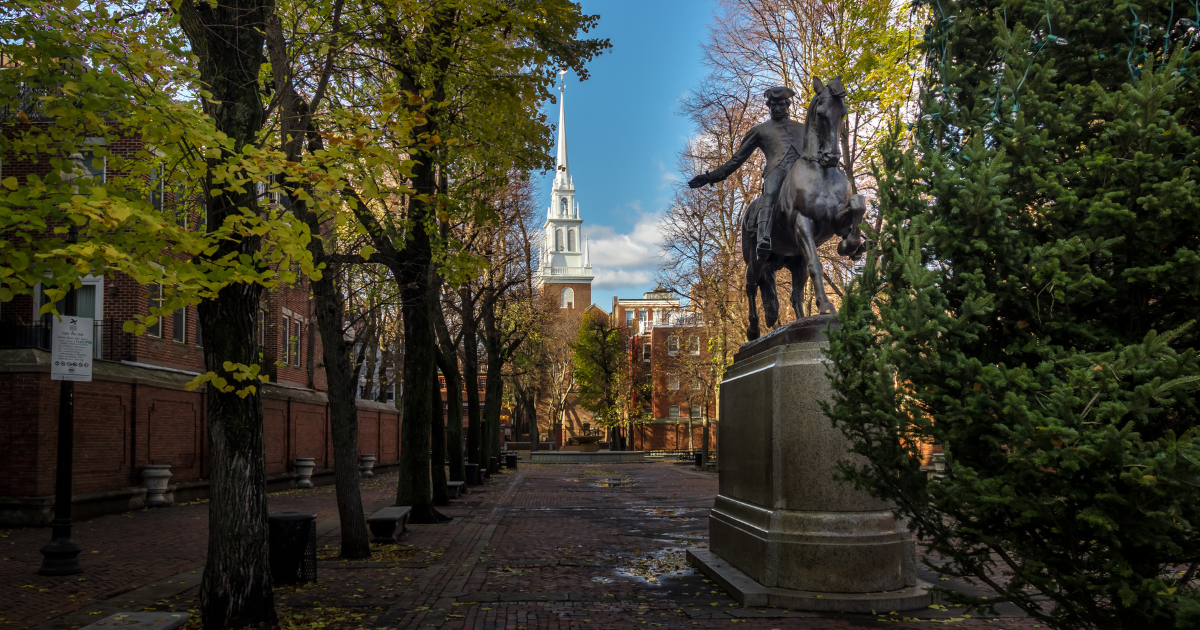
Boston makes history appear deceptively convenient. The red line is clear, the landmarks stand close together, and the same famous names appear repeatedly. The city's revolutionary past, however, was never as orderly as the modern route representing it.
Patriots argued with Loyalists. Calls for liberty coexisted with enslavement. Merchants, laborers, sailors, ministers, and political organizers experienced the same events from radically different positions.
A thoughtful Freedom Trail tour should preserve those tensions while allowing the people behind the landmarks to emerge. Whether you explore with a costumed guide, walk independently, or use augmented reality, the goal is the same: to stop seeing the trail as a sequence of old structures and begin recognizing the human choices that gave those structures meaning.
Follow the red line, but listen for the human stories running beneath it.
Curious about experiencing Boston’s history where it happened? Explore PastPort to discover the augmented reality tours we’re creating, uncover the people behind the city’s landmarks, and see what’s coming soon.